
*** 中文。Dieses Mal auch eine deutsche Version der Seite ***
Our departure is getting closer! I talk about my project often and with enthusiasm. A number of questions come up in the discussions, which I will answer here.
Will you walk the entire route?
Yes, I plan to walk the entire journey without relying on other means of transportation. This trip is an experiment to see if it can be done not only theoretically, but also in reality.
Do you return home during the trip?
Unless external circumstances force me to, I aim to complete the journey in one continuous stretch. However, I’ve designed my route from west to east to include stopovers in Zurich and Wiesbaden in May/June 2025.
When do you start?
My last working day will be Friday, February 21, 2025. After a weekend of farewell-celebrations and preparations, I’ll set off on Monday morning, February 24, 2025.
How can I reach you?
You can email me at rainer@mautz.net. To follow my journey, subscribe here to my blog at http://www.mautz.blog, where I’ll post updates weekly or monthly. For real-time tracking, check my daily position on Polarsteps.
Which route are you taking?
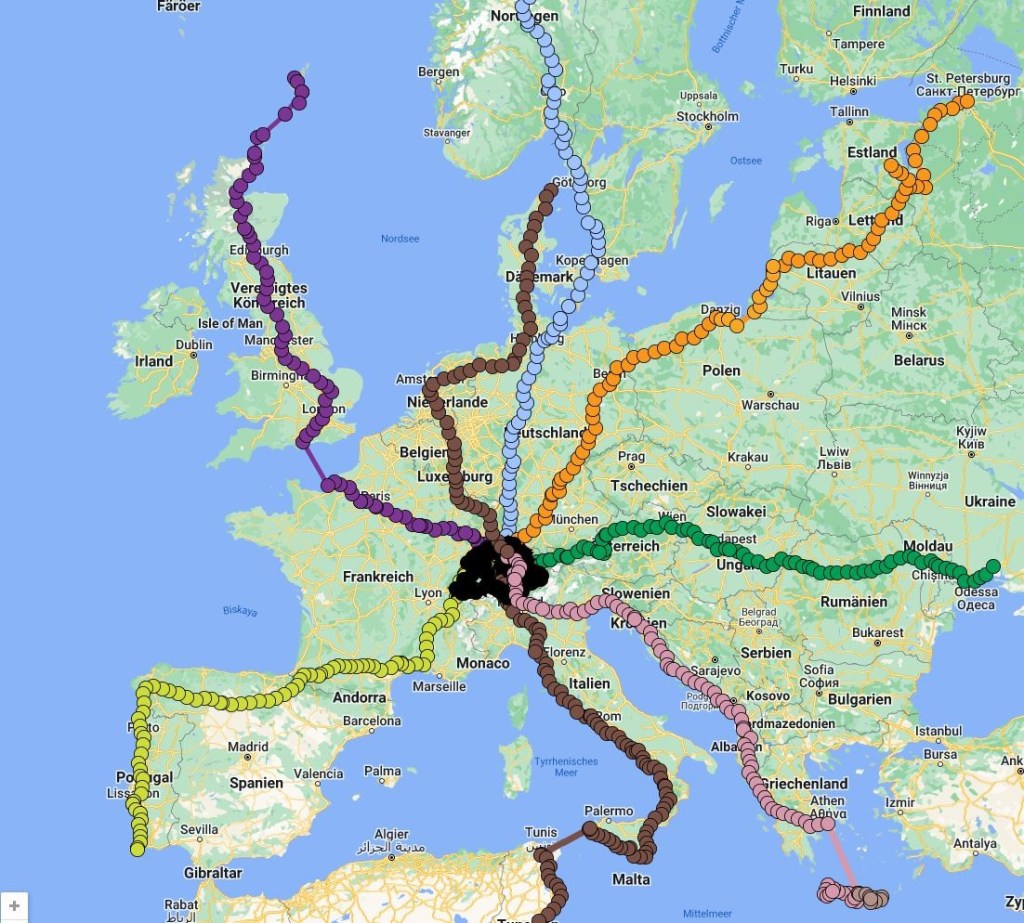
The journey begins along the southern coasts of Portugal, Spain and France, then detours through Switzerland and Germany before heading into Eastern Europe, Turkey, the Caucasus, Iran, Central Asia, Mongolia, China, Indochina, and finally Singapore. You can view the planned route here.
Why are you taking a detour in Europe and Asia?
The 700 km detour to Germany allows me to visit my father and friends in Wiesbaden. In Asia, the detour through Mongolia and China is necessary because the southern route through Pakistan is too risky, and Myanmar’s borders are closed.
Why did you just choose this route?
IThe route from Portugal to Singapore is the longest route within Eurasia (longer than to Kamchatka!). Guang and I also walked the Way of St. James to Sagres in Portugal and are continuing the journey there.
What do you carry with you?
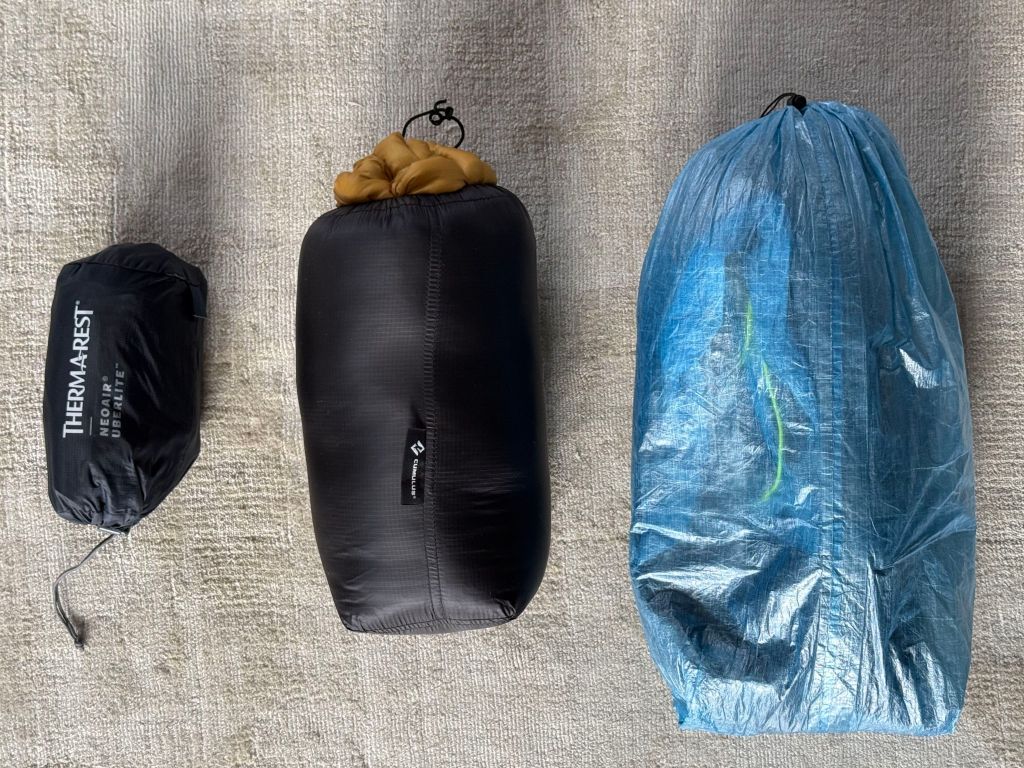
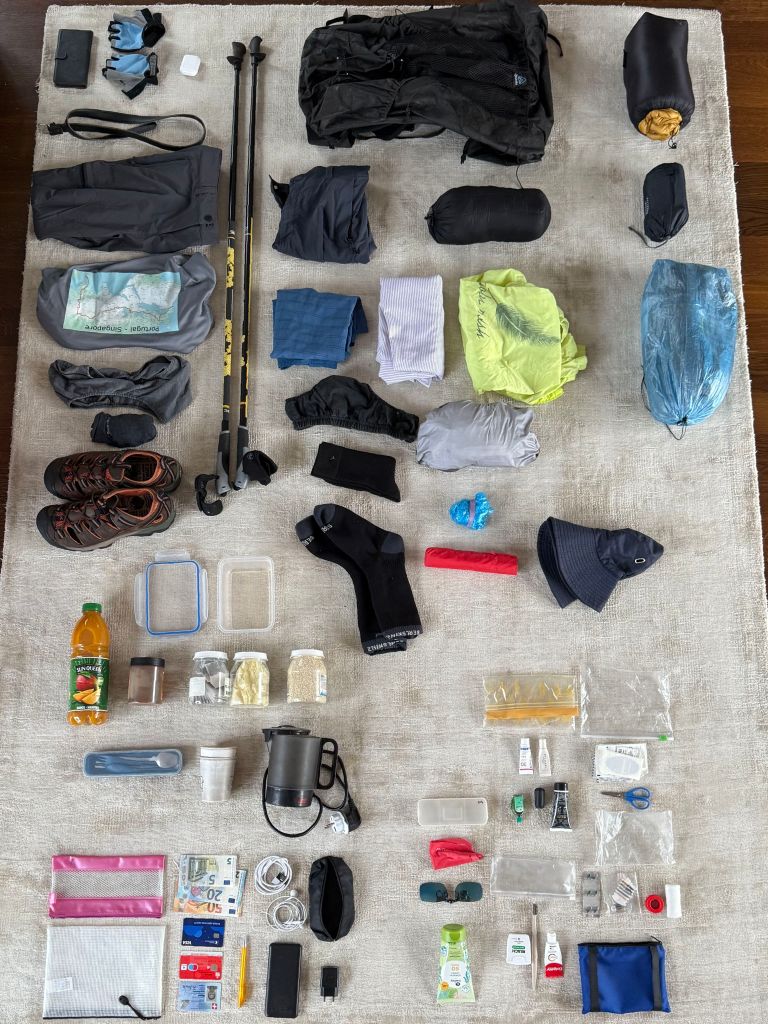
Every gram matters when carrying everything on your back, see my minimalistic packing list. My backpack has a base weight of 4 kg, plus 1.3 kg of camping gear for use outside Central Europe.
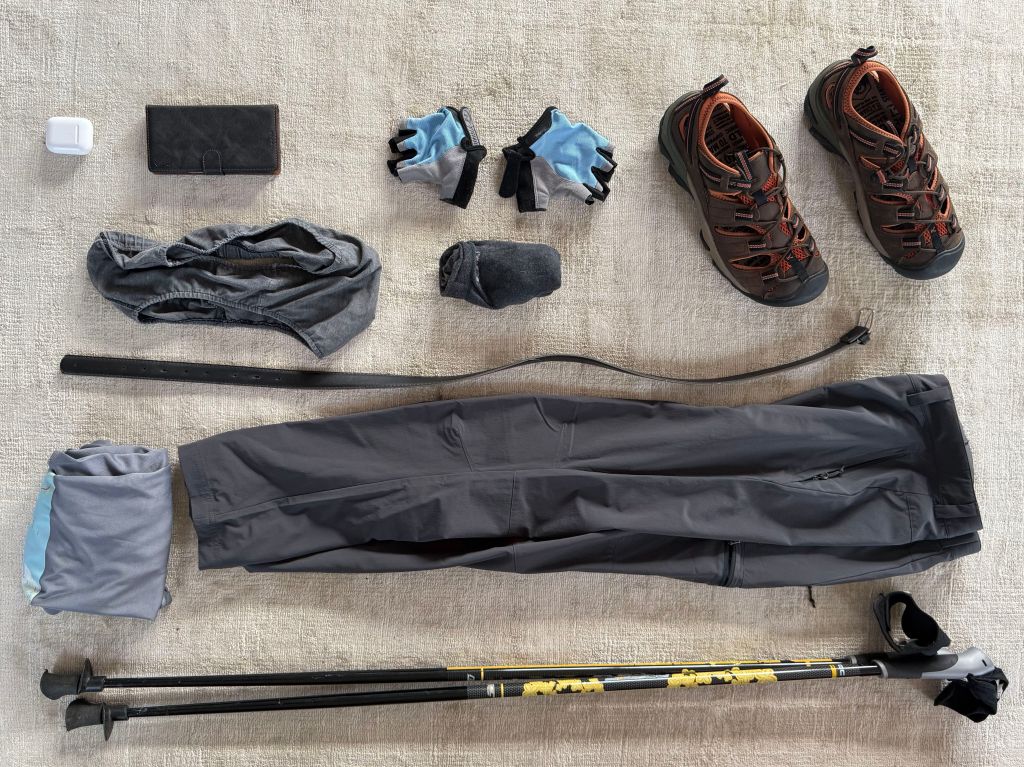
In addition, I carry on my body: clothes (800g), shoes (700g) and hiking poles (400g) as well as my mobile phone & headphones (300g).
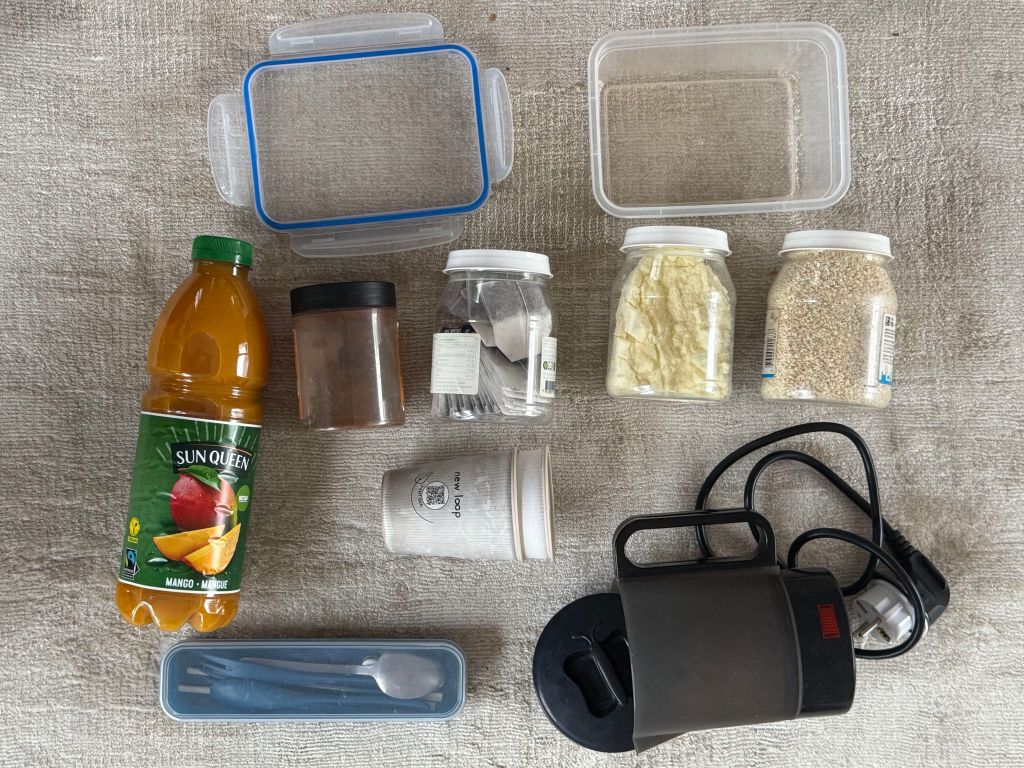
On top of the base weight I carry 1 liter of water and 500g of nuts or similar dry food a day’s stage. While an electric kettle (420g) might seem superfluous, it allows us to enjoy warm drinks regardless of opening hours – from morning coffee to evening tea. Guang can enjoy hot noodles in the morning. Of course, the kettle is not so helpful for the rare camping nights in the wilderness. When Guang joins me, I’ll also carry some of her luggage.
What kind of shoes do you wear?
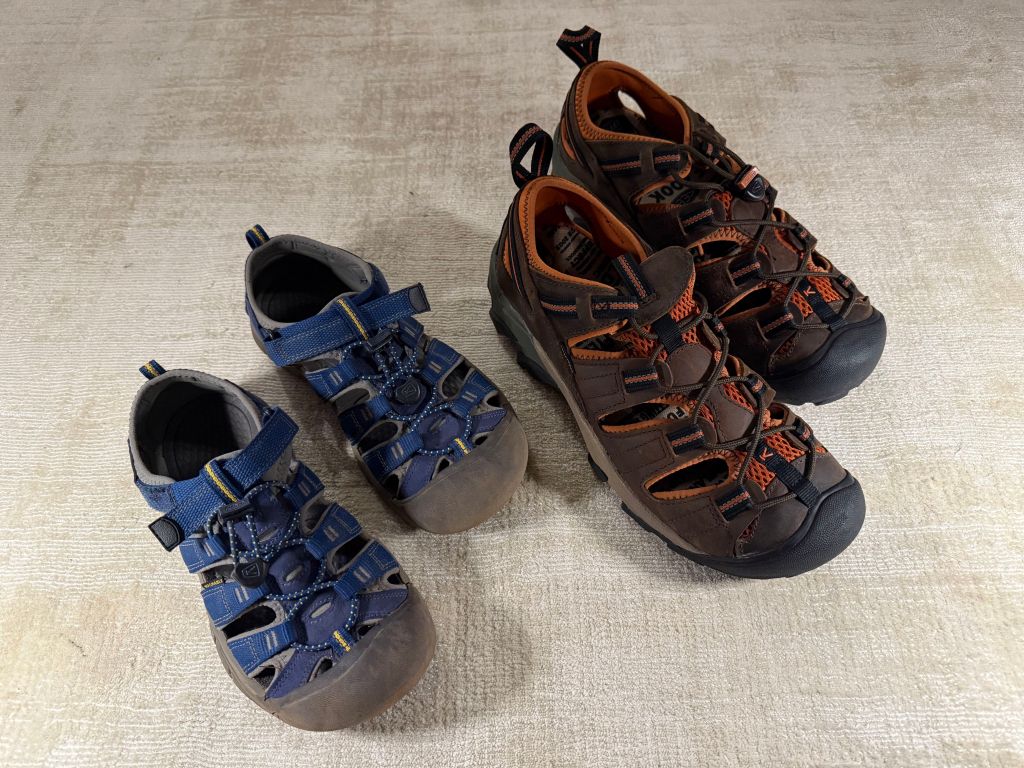
We wear Keen Arroyo II sandals, which are wide at the front, providing ample toe movement and breathability. Though they get wet in the rain, they dry quickly. Anyway, wearing water-proof socks, our feet will stay dry. These sandals have kept us blister-free so far.
Are you walking alone?
Guang will join me partially. She’ll accompany me for the first three weeks, then take a break for the next three. Further plans will be made as we go. I’d also love for others to join me for parts of the trip—feel free to reach out!
How do you navigate?
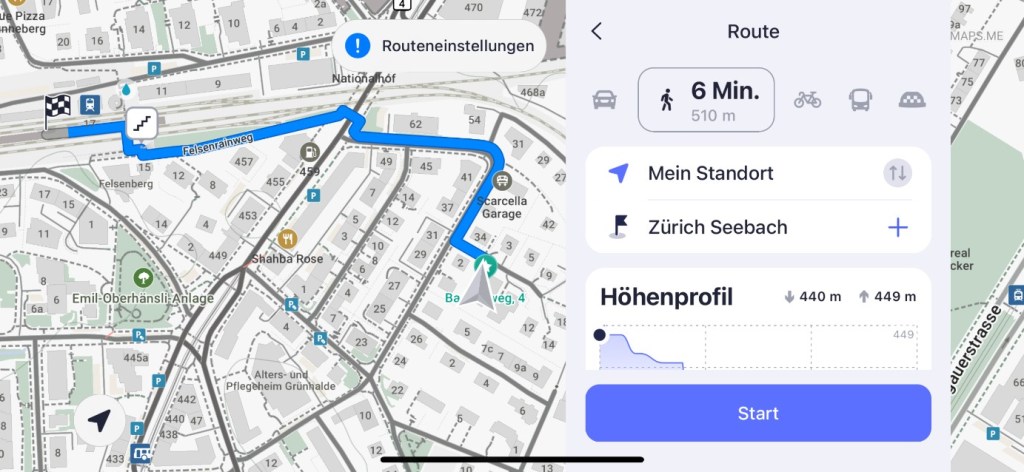
We avoid main roads unless there’s no alternative. In Europe, about 10% of the route follows busy roads. Otherwise, we walk on forest paths, dirt roads, cycle paths, hiking trails, side roads, beaches, and even take cross-country shortcuts. We rarely follow marked hiking routes, preferring to chart our own path using OpenStreetMap data via the maps.me app, which offers offline pedestrian routing. Google Maps is less useful as it often omits footpaths.
Where do you stay, and how do you find accommodation?
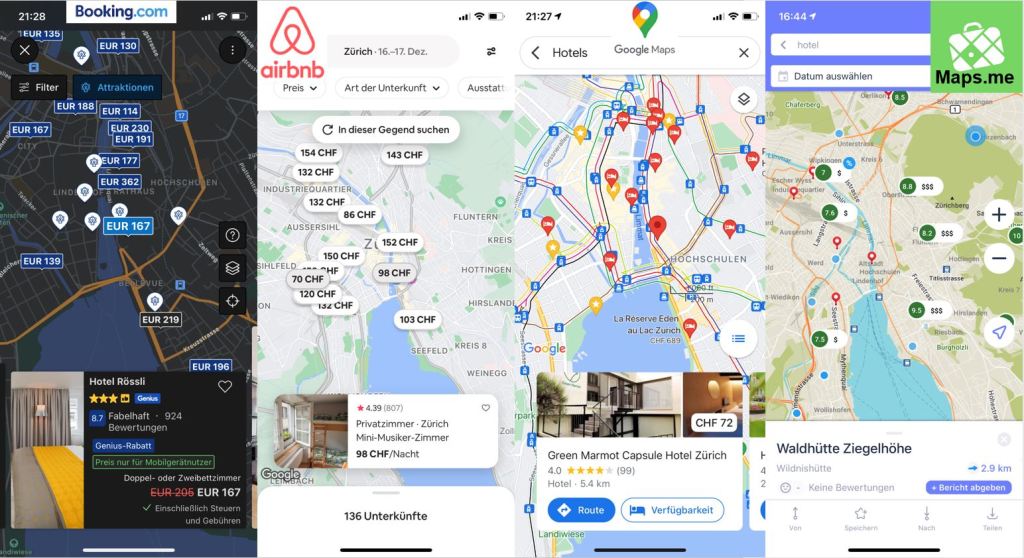
We aim for accommodations with beds and showers but avoid booking far in advance. Each day is planned individually, allowing for spontaneity. We use Booking.com, Airbnb, and Google Maps to find places to stay, ranging from budget dormitories to luxury hotels. Some of our most memorable nights have been in private homes, sharing meals with host families.
Aren’t you afraid of dangerous animals?
The danger from wild animals is often exaggerated. Humans are the most dangerous species. That said, we are cautious around dogs that perceive us as a threat. So far, we have never been harmed by always keeping calm and if necessary pretending to pick up a stone.
What do you see as the biggest difficulty?
In Central Asia I expect visa challenges but also unsafe countries and continental climate with extreme temperatures.
How do you finance your trip?
From our savings. While others fulfil their dream with a stylish sports car, I will spend several years on such an expense – even with a daily budget of 100 €.
Why are you undertaking this trip?
It’s a dream of mine. Our previous hikes through Europe brought immense joy, and this journey is the next step in that adventure.
Why don’t you travel by bicycle?
I have already cycled around the world in 1990. While cycling is faster, it keeps you on roads and away from the real world on the side. Walking allows me to fully immerse myself in the journey. Speed isn’t the goal—happiness grows with slowness.
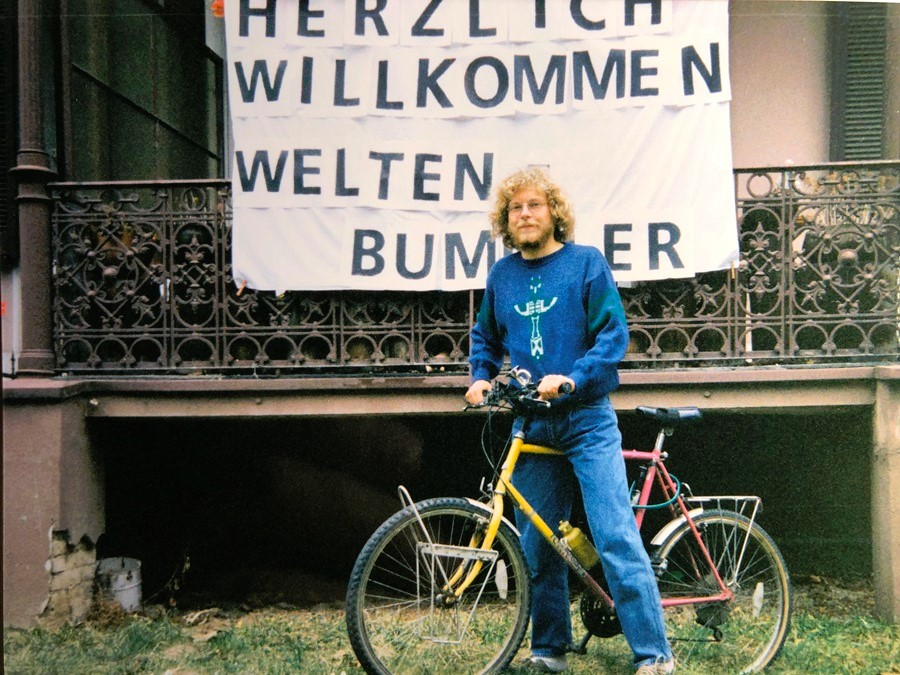
Are you growing your hair out?
Yes, I plan to shave my head at the start and let my hair grow during the trip. If it becomes too bothersome, I won’t hesitate to cut it.
When do you return?
We’ve intentionally avoided setting a fixed return date. On previous hikes, we averaged 30-40 km per day, but I’m unsure if we’ll maintain that pace long-term. We like to cross the Caucasus before winter 2025/26 and Mongolia before winter 2026/27, but we are open to staying longer in places that captivate us.
What do you do after the trip?
We haven’t made any plans yet. The journey itself is my focus for now.


 Rainer Mautz, Long Hike Mainpage
I would be happy if you leave a comment